Reading Your Tennessee Water Quality Report, Section by Section
A Tennessee water quality report can look reassuring, alarming, or simply hard to follow, depending on which table you open first. The key is to read it in context: identify the supply and reporting period, then distinguish detected results from limits, monitoring notes, and water-quality notices. This section-by-section approach helps you understand what the report says—and what it cannot tell you about water at your own faucet.
Start with the report’s purpose and coverage
A water quality report is a summary of information about a public water supply. It may also be called a Consumer Confidence Report, or CCR. The report is useful for understanding where the system’s water comes from, what it monitors, and how reported results compare with applicable standards. It is not a test of every home’s tap.
Metro Water Services, Metropolitan Government of Nashville & Davidson County, says public water systems must annually report an analysis of their drinking water. Metro Water Services also says public water systems are required to report their drinking water analysis every year. The specific report you are reading will identify the supply and the reporting period it covers.
Begin by checking the report’s title, introductory text, and any section identifying the system or supply. A utility can serve more than one area or draw from more than one source, and a report may describe a combined system or a particular supply. Do not assume that a report for a nearby city, county, or neighboring address covers your water service.
If you are not sure which utility serves your home, start with Which Utility Serves Your Tennessee Address, and Where’s Its Report?. If a search for the report turns up nothing, EPA’s CCR Lookup Shows Nothing for Your Tennessee Utility? Next Steps outlines other ways to track it down.
Confirm the reporting period
Check what period the results describe, rather than relying only on when the report was posted or delivered. A report can be published after the monitoring period it summarizes. The report’s title may refer to a publication year while the data inside it refer to an earlier period; look for the date or period stated near the tables and introductory material.
This distinction matters when you compare reports. A result from one reporting period should not be treated as a current reading simply because the report is newly available. If you need the most recent information about an active issue, check the utility’s current notices and updates as well as the report.
Check whether the report matches your water source
Look for wording about the source or sources used by the supply. A system may use surface water, groundwater, or a combination, but do not infer your source from the nearest river, reservoir, or well. Water can be moved, blended, treated, or supplied across service areas. The report, utility, or source information is a better starting point than a map alone.
For background on how municipal sources differ, see From River, Lake or Aquifer: Where Tennessee Cities Get Tap Water. If the report names a reservoir and you want to understand whether it supplies your area, Is the Reservoir Near You the Source of Your Tennessee Tap Water? can help you frame the question for the utility.
A report may cover the supply as a whole, not a specific street, building, or faucet. Even when the water leaving a treatment plant meets applicable requirements, water quality at a particular tap can also be affected by the plumbing and fixtures inside the building, the service line, or conditions in the distribution system. For that reason, a report is valuable context, but it is not a substitute for a targeted test when you have a specific concern.
Read the source and treatment information
The source section gives context for the water the utility treats. It may name a river, lake, reservoir, well field, or other source, and it may describe steps taken to protect or treat that water. Use this section to understand the system’s general setup, not to judge an individual result by itself.
Source water is not the same thing as finished drinking water. Source water is collected before treatment; finished water is the treated supply distributed to customers. A result from a river or well does not automatically describe the water coming from a home tap. Likewise, a report about treated water does not necessarily provide the raw source-water result.
If you encounter a result from a sampling effort focused on a river, reservoir, or groundwater source, check whether the document describes raw water or finished drinking water. That distinction is central to interpreting findings. TDEC Raw-Water PFAS Results vs. Finished Drinking Water Tests explains why these categories should not be treated as interchangeable.
What treatment descriptions can tell you
Reports may describe treatment processes or disinfection. That information helps explain how the utility prepares water for distribution. It does not mean every contaminant is removed, nor does a treatment description by itself establish how much of a substance remains in finished water. Look for the actual monitoring results and the report’s explanation of them.
If a report says the source is susceptible to contamination, read the explanation carefully. A susceptibility rating is generally about the potential for a source to be affected; it is not the same as a finding that a contaminant was detected in finished drinking water. For more on that distinction, see Source Water Susceptibility Ratings in Tennessee Reports, Explained.
What to do when a report covers multiple supplies
A utility can operate more than one source or treatment facility, and reports may summarize results for different parts of a system. Check any notes, system names, or supply labels beside the tables. If the report groups results, look for an explanation of which customers or service areas each result represents.
If the report does not make that relationship clear, ask the utility which listed supply serves your address and whether the result applies to it. This is especially useful when you are comparing a report with a separate local notice, a test result from your own home, or information about another part of the utility’s service area.
A source and treatment overview is not a guarantee about every condition in the distribution network. It is the starting context for reading the monitoring tables that follow.
Decode the results table
The results table is often the most technical part of a report, but it can be read in a consistent order. First identify the contaminant or water-quality parameter. Then find the result, the unit, any limit or benchmark shown, and the notes explaining the sampling method or time period. Do not begin by comparing numbers from different rows before checking whether they use the same units and refer to the same kind of result.
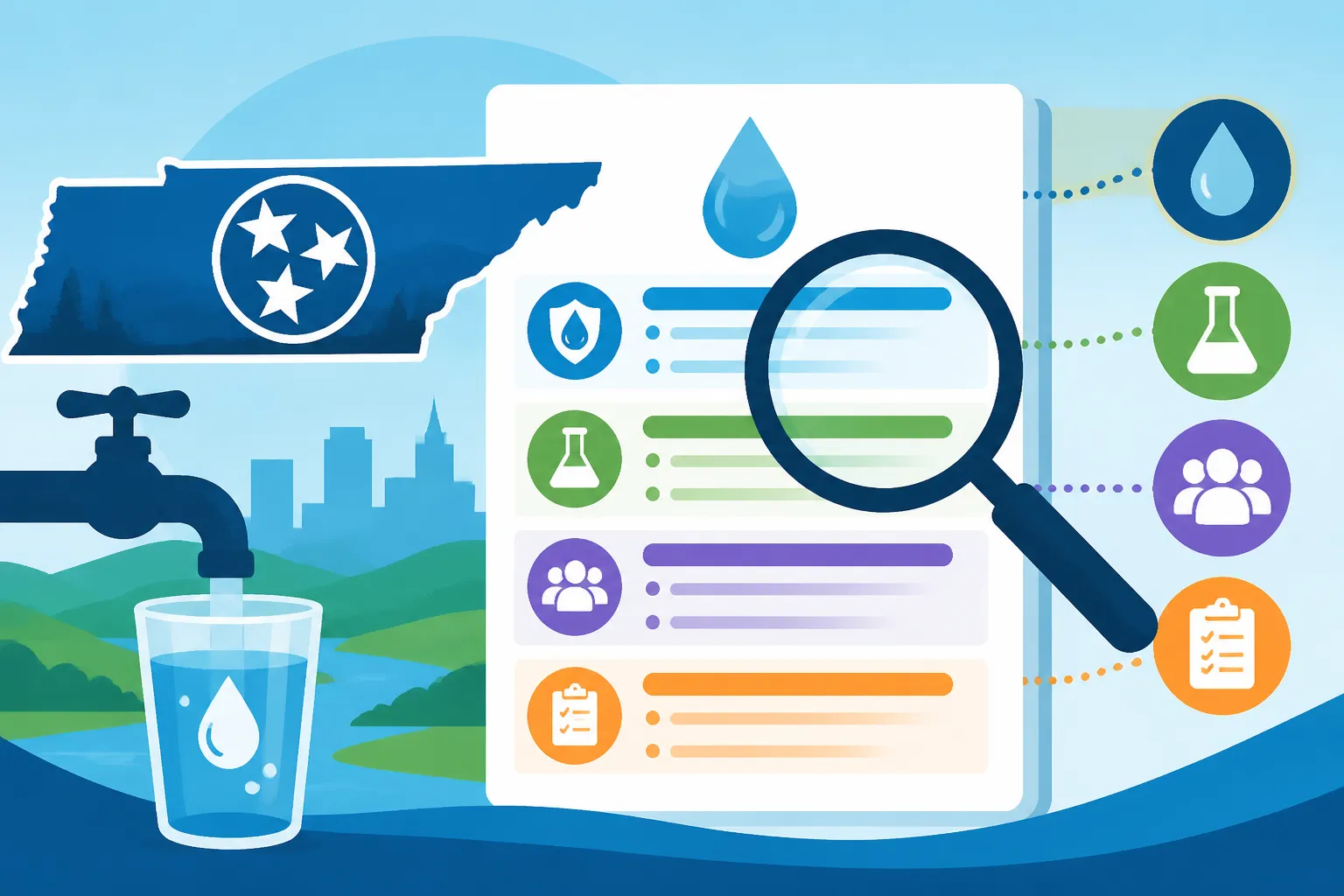
| Table item | What to look for | A useful question |
|---|---|---|
| Contaminant or parameter | The name of the substance or measure | Is this a chemical, microorganism, or treatment-related measure? |
| Result | The reported level, range, or summary | Is it a single result, an average, a range, or a summary statistic? |
| Unit | The measurement label beside the result | Am I comparing results expressed in the same unit? |
| Limit or benchmark | A standard or other comparison value identified by the report | Is this a legal limit, an action level, or another kind of benchmark? |
| Sampling information | The period, location, or method described in the table or notes | Does this result apply to the supply and period I am trying to understand? |
| Violation or explanation | A status, footnote, or narrative clarification | Does the report explain a missed requirement or a result above a limit? |
Identify the kind of result
A result might be shown as a single measurement, a range, an average, or another summary. These formats answer different questions. A range shows that measurements varied across the reported period or sampling points. An average summarizes results and can conceal variation between individual samples. A single measurement records one result but may not show what happened at other locations or times.
Some tables report a percentile-based summary or another statistic rather than a list of every sample. That kind of value should be interpreted according to the report’s notes. It is not necessarily the highest sample result, and it should not be compared as if it were a direct reading from one particular household faucet.
When a result includes a range, note whether the utility reports the full range, a minimum and maximum, or a different summary. Then read the nearby footnotes. Those notes may explain that the system sampled at different places, used a particular calculation, or reported results from different parts of a supply.
For a closer explanation of table layouts and result wording, see Violations, Ranges and Detected Levels: Decoding a Tennessee CCR Table.
Check the units before comparing values
Units tell you how a result is expressed. A value in one unit cannot be compared directly with a value in another without a valid conversion. Even when two reports use the same unit, confirm that they report the same contaminant, sampling period, and statistic.
A unit can also affect how large or small a number appears. Do not judge a result by the number of digits alone. Read the unit label and the report’s comparison value together. If the unit is unclear or missing from a cropped screenshot, consult the complete report or ask the utility for clarification.
If you are looking at a lab report from your own home, remember that its units and sampling method may differ from those in the utility report. How to Read a Tennessee Water Test Report: Units, Limits and Flags can help you understand a separate laboratory result.
Understand “not detected”
A report may use wording such as “not detected” or an abbreviation to indicate that a substance was not found at or above the method’s reporting or detection threshold. That wording does not necessarily mean the substance is absent in an absolute sense. The method and reporting threshold matter.
Check the report’s notes for an explanation of abbreviations and detection limits. If the report does not explain them, ask the utility what “not detected” means for that specific table. Avoid treating an abbreviation as proof that testing was not performed, or as a guarantee that a substance could not be present.
Read the entire row
A common mistake is to look at the result and stop. The full row may contain a comparison value, a date, a range, a violation indicator, or a footnote that changes how to interpret the entry. Read across the row and then read any numbered or marked notes that correspond to it.
If several rows appear to cover related substances, do not combine them into one conclusion. Each may have a different monitoring method, limit, unit, or reporting period. The report’s own explanation is the best guide to what each row represents.
Understand limits, action levels, and violations
A comparison value in a report is not always the same kind of standard as the one in the next row. Reports may include regulatory limits, treatment requirements, action levels, or other benchmarks. Their names and meanings matter. Do not assume that every number in a “limit” column represents the same legal test.
Read the column heading and its definitions. Then check the narrative and footnotes. If the report explains that a result is compared with a particular standard, use that explanation rather than relying on a general interpretation from another report or website.
An action level is not the same as every other limit
Some contaminants are assessed using an action level or a system-wide sampling approach rather than a straightforward comparison between one sample and a maximum allowed concentration. The report should identify the kind of benchmark used and explain what the reported statistic represents. A household sample or a single tap reading may not be directly comparable with a utility’s system-level summary.
Lead is a good example of why the distinction matters. A report may summarize sampling at selected taps in the distribution system or customer homes, while a separate test examines water from your own faucet. Those are related but not identical kinds of evidence. To understand the reported metric, see Reading the 90th-Percentile Lead Result in a Tennessee Water Report. For concerns about lead in a particular home, Using a First-Draw Sample to Catch Lead From Tennessee Home Plumbing explains why the collection method matters.
What a violation entry means
If a table or narrative identifies a violation, read the accompanying explanation rather than guessing from the result alone. A violation can relate to a monitoring or reporting requirement as well as to a contaminant result. The report should state what happened and may describe corrective steps or customer notification.
A violation is important information, but it does not necessarily tell you by itself what action to take at a specific address. Look for a current utility notice, determine whether the issue affects your supply, and follow any instructions in the notice. For a broader explanation of who oversees drinking water and how responsibilities are divided, see Who Regulates Tennessee Drinking Water? TDEC, EPA and Your Utility.
If there is an active health or safety notice, do not use an older annual report as a substitute for current instructions. Reports summarize a defined monitoring period; an advisory or emergency notice addresses a particular situation. Tennessee Boil-Water Notices: Where to Look and What to Do explains how to find and follow that kind of notice.
No violation does not mean every possible concern is ruled out
A report with no listed violations is useful evidence about the utility’s reported compliance and monitoring, but it is not a universal assessment of every possible substance, every home’s plumbing, or every moment in time. The table covers the substances and monitoring described in that report. A separate concern may require a different test or current information from the utility.
That is why it helps to define the question before drawing a conclusion. Are you trying to understand whether the public system reported a violation? Whether a particular contaminant was tested? Whether a result applies to your supply? Or whether water from your own tap needs testing? Those questions may require different sources of information.
Make sense of common report sections
Many reports combine tables with explanatory sections. The exact layout can vary, so use the report’s headings and glossary rather than expecting every document to follow one template.
Contaminant monitoring
This section may list substances the utility monitored, reported results, comparison values, and any associated notes. Start by finding the substance you care about, then read the complete row and its explanation. If the substance does not appear, do not assume that it was tested and found absent. Look for the report’s description of what it includes and ask the utility whether the substance was monitored and where results are published.
Some contaminants are monitored under separate programs or appear in documents other than the annual report. For example, information about PFAS may be available in a utility report, a state sampling document, or a separate monitoring record. PFAS in Tennessee Water: Who Samples, Which Limits Apply, What’s Next provides broader context, while Where to Look Up PFAS Results for Your Tennessee Tap Water focuses on finding relevant records.
Disinfection and treatment measures
A report may include measures related to treatment or disinfection, along with a limit or operational benchmark. These measures help describe how the system operates. They are not automatically direct measures of taste, odor, or the presence of every contaminant.
If you notice a chlorine taste or smell, that experience alone does not tell you the reported concentration or whether a standard has been exceeded. Compare the report’s relevant table with any current utility updates. For a practical starting point on taste and odor changes, see Tennessee Tap Water That Tastes, Smells or Looks Off: A Starting Guide.
Microorganisms
A report may include monitoring related to microorganisms, such as indicators used to assess water quality. Check whether the table describes a detection, a system-level result, or a particular type of sample. The report’s notes should clarify how the result was evaluated.
If the report identifies a microbial concern or the utility issues a notice, follow the notice’s specific directions. Do not use a routine report table to override a current advisory. For help understanding a particular type of result, see Total Coliform and E. Coli Lines in a Tennessee Water Report.
Lead and copper
Lead and copper information can be especially easy to misread because the report may summarize samples collected at selected locations rather than provide a result for every home. The sample selection and calculation method matter. Look for the report’s explanation of its sampling approach and the meaning of the summary value.
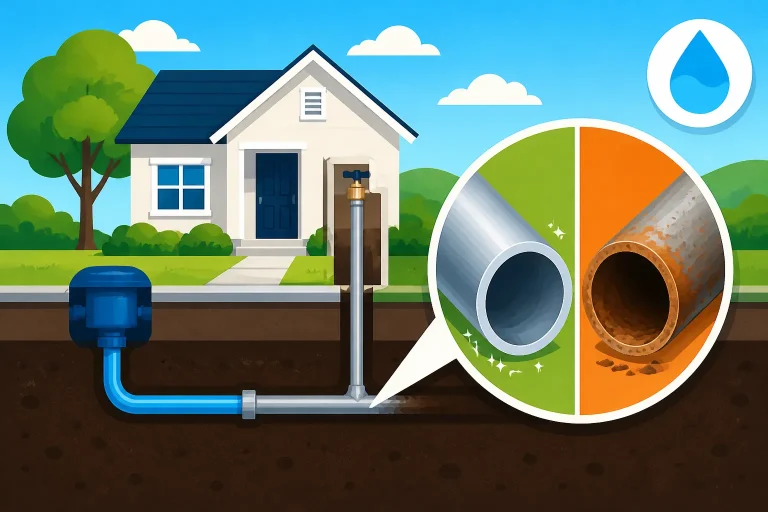
Even a reassuring utility summary cannot identify the material of your home’s service line or determine what happens after water enters your plumbing. A home’s pipes, solder, fixtures, and periods of stagnation can influence tap samples. For that reason, a service-line inventory and a faucet test answer different questions. See How to Check Your Tennessee Home’s Service-Line Material if you are trying to identify the pipe, and Lead in Tennessee Drinking Water: Sources, Tests and Who to Ask for a broader overview.
Water characteristics and secondary measures
Reports may mention characteristics such as hardness, minerals, or other aesthetic measures. These can help explain scale, spots, staining, or taste, but they do not all serve the same purpose as health-based drinking-water standards. A hardness value, for example, can be useful when considering scale or a softener, but it should not be read as a contaminant violation unless the report explicitly says so.
If hardness is not included, the utility may provide the information separately. Hard Water From Tennessee City Supplies and Where Utilities Post It describes where to look. If your concern is an unusual appearance, odor, or taste, distinguish a persistent household issue from a short-lived change after utility work and consult Tennessee Tap Water That Tastes, Smells or Looks Off: A Starting Guide.
Use the report to answer your question
A report is most helpful when you know what you are trying to find out. Rather than reading every line without a goal, match your concern to the type of information that can answer it.
If you want to know where the water comes from
Read the source-water section and confirm that the listed supply serves your address. If the report covers several sources or service areas, ask the utility which one applies to you. Do not assume that the closest water body is the source or that a source-water result is the same as a finished-water result.
If you want to know whether a substance was detected
Find the relevant row, confirm the units, and read any notation such as “not detected.” Then check the monitoring period and method notes. If the substance is not listed, ask whether it was tested in the reporting period and whether results are posted separately.
If you want to know whether a result exceeds a standard
Identify what the comparison value represents. Check the report’s definition of the limit or benchmark, and see whether the result is a single measurement or a summary. If the report lists a violation, read the explanation and check for a current notice.
If you want to know what is in your own home’s water
A utility report is not a sample from your kitchen tap. A home-specific test may be appropriate when the concern involves plumbing, a service line, a private well, or a substance that the report does not address. First identify the type of supply. Public water customers can ask the utility what testing information is available; private well owners generally need to arrange testing appropriate to the concern. How to Get Water Tested in Tennessee: Labs, Kits and Free Programs explains testing options.
For a home-specific issue, make the question precise before choosing a test. A test for lead, bacteria, nitrate, hardness, or another concern uses different collection and analysis methods. A general-purpose kit may not measure what you need. For city-water customers, Where to Get City Tap Water Tested in Tennessee: Utility or Lab? can help distinguish utility information from independent laboratory testing.
If your water tastes, smells, or looks different
A change at one faucet may have a different explanation from a change throughout the home or neighborhood. Note whether the issue is limited to hot water, one fixture, or all taps, and whether a current utility notice or maintenance update exists. The annual report can provide background, but it may not explain a short-term event.
If the change is sudden or widespread, check the utility’s current notices and contact the utility through its official website for current contact details. If the water change comes with a specific health concern, ask the local health department or a medical professional rather than relying on taste or appearance as a health assessment.
If you are comparing reports
Compare reports only after aligning the supply, monitoring period, contaminant, units, and kind of result. A result can appear to change because the supply changed, a sampling method changed, the number of samples differed, or the report summarized data differently. Read explanatory notes before concluding that the water itself changed.
Keep a copy of the report and note any result or question you want to follow up on. If you contact the utility, ask a focused question: which supply serves your address, what the table’s result represents, whether the result is current, or whether additional monitoring information is available. That usually gets you a clearer answer than asking whether the water is simply “safe” without naming the concern.
Frequently Asked Questions
Is a Tennessee water quality report the same as a test of my faucet?
No. It summarizes information for a public water supply and its monitoring. It does not test every home’s plumbing or establish the result at a particular faucet. A home-specific concern may call for a separate test.
Does “not detected” mean a substance is completely absent?
Not necessarily. The phrase usually reflects the test method and the threshold used for reporting. Check the report’s notes or ask the utility what the wording means for that specific result.
Should I use the report to decide whether there is a current boil-water notice?
No. An annual report summarizes a reporting period, while a boil-water notice addresses a current event. Check the utility’s current notices and follow the instructions that apply to your address.
What should I do if I cannot tell which report covers my home?
Ask the utility which supply serves your address and where it posts the corresponding report. The utility’s official website is the place to find current contact details.
Disclaimer
This article is for general informational purposes only and does not constitute professional advice. Laws, prices and regulations vary by location and change over time. Consult a qualified professional for guidance on your specific situation. Tennessee Water Guide is not a government agency or water utility and is not affiliated with any public water system.