Tennessee Boil-Water Notices: Where to Look and What to Do
A boil-water notice can arrive when you are cooking, filling a glass, or caring for someone at home—and it may not be obvious which water uses are affected or when normal use can resume. This guide explains where Tennessee customers can check for current notices, how to follow the instructions, and what to do while waiting for an official all-clear.
Where to look for a Tennessee boil-water notice
Start with the water provider that serves your address. A notice may apply only to one system, area, or group of customers, so a message about a nearby town is not enough to tell you whether your taps are affected. If you are unsure which provider serves your home, confirm it using a recent water bill, your lease or closing documents, or the provider’s official website.
Check the provider’s official website and its customer alert channels. Depending on how the provider shares urgent information, a notice may appear as a news update, an alert banner, a service-status message, an email, or a text. A recorded message or customer notification may also provide instructions. Use contact details published on the official provider website if you need clarification.
The Tennessee Department of Environment and Conservation is another place to check for state information. According to the Tennessee Department of Environment and Conservation, customers must be notified if their drinking water does not meet safety standards. That notification requirement is important, but it does not mean that every state webpage will show every current, local notice as soon as it is issued. For immediate instructions about your service, check with the water provider.
If an alert comes from a neighbor, community group, social media post, or news report, treat it as a reason to verify—not as a substitute for the provider’s instructions. Posts can be incomplete, outdated, or about a different part of the system. Check the provider’s official channels for the affected area, the notice’s current status, and the actions customers should take.
Confirm that the notice covers your address
Read the notice closely for the names of affected streets, neighborhoods, pressure zones, or other boundaries. If it gives a map, confirm your location on the map rather than relying on a vague reference such as “the north side.” A nearby building may be served by a different provider or part of the system.
When the boundaries are unclear, ask the provider directly whether your service address is included. If you rent, you can also ask the landlord or property manager whether the building received a notice, but confirm the instructions with the provider. A message from a property manager may not include all the details in the utility’s notice.
People with different water arrangements should verify their supply separately. A home on a private well, shared well, or other private source does not necessarily receive notices from a city or utility provider. For private wells, a public-system notice nearby does not, by itself, establish whether the well is affected. If the well itself may have been exposed to flooding, damage, or another contamination concern, contact the appropriate local health or environmental office for advice. The questions to ask are different for private supplies; Which Tennessee Water Supplies Count as Public, and Which Are Private? explains the distinction.
Check for updates, not just the first alert
A notice can change as the provider investigates and shares new instructions. Save the notice or keep a screenshot, but return to the provider’s official source for updates. Look for a clear statement that the notice has ended and any directions that apply after it ends.
If two messages seem to conflict, do not choose the more convenient one. Check the date or time attached to each message, then contact the provider using its official website if the conflict remains. A social post saying a notice is “probably over” is not an official all-clear.
For help checking an alert’s status and what to do after it ends, see Is the Boil Order Over? Confirming With Your Tennessee Utility. If the provider’s website is unavailable or hard to navigate, use its official customer contact channel rather than relying on an unverified number or an old notice shared online.
What a boil-water notice means—and what it does not
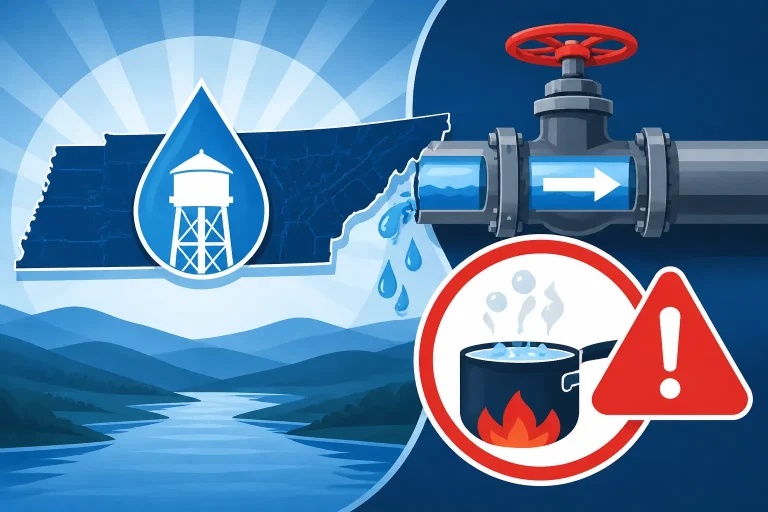
A boil-water notice tells customers to take a specified precaution with drinking water. Follow the notice as written. It may name particular water uses, describe which area is affected, and explain how to find updates or confirm that the notice has ended. Do not assume that all notices have identical instructions.
A notice does not necessarily mean that a test has confirmed harmful material in the water. A provider may issue a precautionary notice when it has a reason to be concerned about water safety or cannot yet confirm that water quality meets its requirements. The cause and scope depend on the situation. The provider’s notice is the place to learn what is known and what action customers should take.
This is different from an annual water quality report. An annual report summarizes test results and other information for a reporting period; it is not a real-time alert about a current interruption or local precaution. A boil-water notice addresses an immediate situation and gives customers instructions for the affected service area. For a closer look at the difference, read Boil-Water Notice vs. Annual Water Quality Report: Not the Same Thing.
The provider should explain the reason for the notice when it has information to share, but the notice may be issued before the investigation is complete. It is reasonable to want a cause, a timeline, and a clear account of which customers are affected. Still, do not delay following the instructions while waiting for the full explanation.
Read the exact scope and directions
Look for the following details in the notice:
- The provider or water system that issued it.
- The location or customers it applies to.
- The water uses covered by the instructions.
- The recommended action, such as using bottled water or boiling tap water in the way the notice describes.
- Any exceptions, cautions, or alternative instructions.
- How the provider will share updates.
- What the provider says customers should do once the notice is lifted.
If any of these details are missing or confusing, ask the provider to explain them. Do not infer that a notice applies only to drinking from a glass if it also addresses cooking, washing produce, brushing teeth, or other uses. Conversely, do not assume that a direction for drinking water automatically answers every question about bathing, laundry, or other household activities. The wording of the notice and the provider’s clarification should guide your choices.
A notice may use terms such as “boil-water advisory” or “boil-water notice.” The label alone does not tell you whether your address is included or what exact precautions apply. Read the instructions, check the boundaries, and follow the provider’s latest update.
Notice, outage, and annual report are different situations
A temporary water outage or pressure problem may happen without a boil-water notice, while a notice may be issued even if water continues to flow from the tap. Do not decide that a notice is irrelevant because your water looks clear or the pressure seems normal. Appearance, taste, and smell are not a substitute for the provider’s instructions.
Likewise, an older annual report cannot confirm that a current notice has ended. If you want to understand test results for your system, Reading Your Tennessee Water Quality Report, Section by Section can help. For current safety instructions, use the provider’s latest alert.
What to do as soon as you receive the notice
First, confirm whether the notice applies to your address. Then follow the instruction it gives for the affected water uses. If the notice directs customers to use bottled water, use bottled water for the uses identified. If it directs customers to boil tap water, follow the provider’s precise directions for how to do so. Do not substitute a pitcher filter, refrigerator filter, or another household device for the stated precaution unless the provider specifically says it is suitable.
If you cannot access the notice immediately, contact the provider through its official channel and ask what customers in your area should do. In the meantime, choose a conservative option for drinking and food preparation rather than assuming the water is usable. Keep checking official updates so you can follow any revised instructions.
Set aside water for the uses named in the notice
Use the notice to decide what needs bottled or appropriately treated water. Common questions include whether the precaution applies to:
- Drinking and filling water bottles.
- Making drinks, ice, and food.
- Washing produce or preparing food that will not be cooked.
- Brushing teeth or rinsing a mouthguard.
- Mixing infant formula or preparing food for someone with special needs.
- Giving water to pets.
- Using appliances that draw water from the plumbing.
The provider’s notice may address these uses directly. If it does not, ask. For infant feeding, pregnancy, immune concerns, or another health question, ask a medical professional or local health department about the safest option for the person concerned. Do not use general household assumptions to resolve a medical question.
If bottled water is the option you are using, keep it clean and separate from untreated tap water. Store it in a container intended for drinking water, and avoid pouring it into a container that may be dirty or contaminated. If you are boiling water, follow the notice’s method and handling instructions. Let treated water cool in a clean, covered container if you need it later.
Avoid relying on a home filter as a replacement
A home filter is not automatically an alternative to boiling or bottled water during a notice. Filters differ in design and in what they are certified or intended to reduce. A filter that improves taste, for example, should not be assumed to remove the concern behind a particular notice. Follow the provider’s instructions unless it has specifically confirmed that a particular treatment method is appropriate for the current situation.
If you already use a pitcher, refrigerator, under-sink, or whole-house system, check the provider’s notice for advice about it. If the notice does not mention filters, ask the provider whether to bypass the system, keep using it, or take another step. For more detail on this issue, see Do Home Filters Make Water Safe During a Tennessee Boil Notice?.
Do not assume that boiling solves every water-quality problem. Boiling is a precaution used under specific circumstances, not a universal treatment for every possible contaminant. The notice should tell you whether boiling is the recommended action; if it does not, ask the provider what to use instead.
Make the precaution manageable at home
If several people share the home, tell everyone which tap water uses are affected and where to find the provider’s instructions. Keep a supply of bottled or otherwise properly treated water in a place that is easy to reach. Set aside enough for the uses named in the notice, while avoiding unnecessary stockpiling that could leave other customers short.
Mark any container holding treated water so it is not confused with untreated tap water. If children, guests, or a caregiver may use the kitchen, put the current instructions somewhere visible. If the household relies on water for a pet, medical equipment, or a special diet, contact the provider and the relevant care professional to clarify what is safe.
Water uses that need particular attention
People often think first about drinking a glass of water, but tap water also reaches appliances, food, and personal-care routines. The notice may specify which of these uses need bottled or treated water. Read its full wording and ask the provider about anything it leaves unresolved.
Drinking, cooking, and food preparation
Use the water source and method specified by the provider for drinking and cooking. That includes water used in beverages, food preparation, and any recipe where water is added but not later treated in a way the notice recognizes as adequate. Do not assume that a kettle, coffee maker, or other appliance will apply the provider’s required treatment. If the notice does not address appliances, ask the provider rather than guessing.
For food that is washed or rinsed with tap water, follow the notice’s directions. If the notice says to use bottled or boiled water for food preparation, apply that instruction to produce and other foods that will be eaten without further cooking. Ask whether ice made before or during the notice should be used; do not assume that a freezer makes untreated water safe.
If you have already used tap water after learning about the notice, stop using it for the affected purposes and follow the provider’s instructions from that point forward. For concerns about a particular person’s exposure or symptoms, contact a medical professional or local health department. The water provider can answer questions about the notice and system; medical professionals can address individual health concerns.
Teeth, bathing, and other personal uses
Brushing teeth and rinsing the mouth involve water that can be swallowed, so check whether the notice explicitly covers them. If it does not, ask the provider. Use bottled or otherwise approved water for mouth care if the notice directs you to do so.
Bathing and handwashing may be treated differently from drinking or preparing food, but the answer depends on the notice and the circumstances. Do not assume that every household activity is automatically safe or automatically restricted. Follow any instructions about avoiding swallowing water, keeping water away from a particular person, or using an alternative supply. If the notice is unclear, ask the provider or local health department.
When someone has a medical condition or specific care needs, get individualized advice from a medical professional. A general notice may not cover every personal circumstance, and a health professional can help interpret the precaution for that person.
Ice, appliances, and equipment connected to the plumbing
Ice makers and water dispensers may use tap water, so do not assume that ice or chilled water is covered by the same directions as a sealed bottle. Check the notice for instructions on ice and appliances, and ask the provider if the notice is silent. Ice made from water that was not treated according to the notice may need to be discarded if the provider advises that step.
Coffee makers, hot-water dispensers, humidifiers, and similar devices may not heat water in the way required by a notice. Do not rely on them as treatment unless the provider confirms that they meet the current instruction. If the notice says to use bottled water, use that for the appliance only if the manufacturer’s instructions permit it.
A device that connects directly to household plumbing may need attention when the notice ends. The provider may advise flushing a line, replacing a filter cartridge, discarding ice, or taking another step. Do not assume that every device needs the same action. Ask the provider and consult the device maker’s instructions where relevant.
Pets, plants, and non-drinking uses
Ask the provider whether the notice applies to pets’ drinking water. Do not assume that an animal is unaffected simply because the notice is intended for people. If a pet has a medical condition or shows signs of illness, contact a veterinarian.
Watering plants, washing floors, and doing laundry may be outside the uses addressed by some notices, but the wording can differ. Follow any restrictions stated by the provider. If the notice does not say whether a particular use is allowed, ask before relying on the tap. A clear instruction is more useful than trying to interpret the notice from its title alone.
How to handle the notice in different household situations
The same notice can raise different practical questions for a household with children, a rental building, a shared supply, or a business. The key is to confirm who is responsible for communicating the provider’s instructions and to make sure that anyone using the water can see the current guidance.
If you rent or live in a multi-unit building
Check whether the building manager or landlord has received the provider’s notice, but do not rely only on a hallway sign or word of mouth. Ask which provider serves the building, whether the notice applies to your unit, and how management will share updates. Confirm the instructions with the provider’s official information if possible.
In a building with shared kitchens, laundry rooms, water dispensers, or ice makers, make sure the notice reaches everyone who might use them. Building staff should not assume that residents know about a notice just because one person received an alert. If management has not posted the instructions, ask them to communicate the provider’s current guidance.
If the building’s water source is unclear, find out whether it is supplied by a public system, a private well, or another arrangement. A notice from a neighboring system may not cover the building. City Supply or Well? What Tennessee Renters Confirm Before Testing covers questions renters can ask about their water supply.
If you manage a workplace or public-facing property
A business, school, care setting, or other property may have more people relying on its taps than a household does. Confirm directly with the provider whether the notice applies to the location, then follow any instructions relevant to the property’s uses. Do not assume that a notice sent to one employee has reached coworkers, clients, visitors, or contractors.
Make the instructions visible where people get drinking water or food, and identify any tap or dispenser that should not be used. Check with the provider about equipment connected to the water system, including ice makers, beverage dispensers, and food-preparation equipment. If the property has a health or safety officer, involve that person in communicating and carrying out the provider’s instructions.
For settings where people may have specific health needs, ask the relevant medical or public health professional for advice. A water provider can explain the service-area notice and the system’s status; decisions about individual medical needs should be discussed with a qualified professional.
If you depend on a private well or shared supply
A notice from a nearby public water provider does not necessarily apply to a private well. But being outside the provider’s service area does not prove that a well is unaffected by a local event. Flooding, damage around the wellhead, or a nearby contamination concern may warrant separate advice and testing.
If a private well may be affected, contact the appropriate local health or environmental office for guidance on what to do and whether testing is needed. Do not assume that a standard household filter or a boil-water notice for another system provides the right answer for a well. Private supplies have different oversight and testing considerations; Private Wells in Tennessee: An Owner’s Guide to Rules and Upkeep offers more background.
For a shared well, notify the other users and agree on how to communicate any instructions or test results. If no one knows who is responsible for maintaining the supply, identify the owner or manager before making treatment decisions. A neighbor’s clear water or a past clean test is not a substitute for advice about the current concern.
What to do when the notice changes or ends
Keep following the notice until the provider explicitly says it has ended or provides a different instruction. Do not decide that normal use has resumed because the water looks clear, an outage has stopped, or a neighbor says service is back to normal. A restoration of water service does not necessarily mean the provider has lifted a precaution.
When the provider announces that the notice is over, read the entire message. It may include steps customers should take before returning to normal use. Those steps can vary with the situation, so do not apply a generic flushing or cleaning routine unless the provider recommends it.
Follow the provider’s post-notice directions
The provider may tell customers to flush taps, run certain fixtures, discard ice, clean equipment, or take another step. Follow the instructions it actually gives, including which taps or devices they cover. If you cannot tell whether a direction applies to your plumbing or appliance, contact the provider for clarification.
Do not assume that every household needs to replace all filters or clean every water-using appliance. The right action depends on the system, the notice, and the equipment involved. Check the filter maker’s instructions as well as the provider’s message. If there is no direction about your device, ask before spending money or changing its setup.
If you operate a workplace or rental property, share the all-clear and any follow-up steps with everyone who received the original notice. Keep a copy of the message so staff, residents, or future occupants can see what was done.
If no all-clear appears
If the provider has not said that the notice is over, continue to follow the existing instructions. Check the official alert channel again and contact the provider if the status is unclear. Ask whether the notice remains active for your address, whether any actions have changed, and where the next update will appear.
If a provider’s website has not changed but another official message says the notice is over, confirm that the newer message is genuine and applies to your service area. Look for a matching update from the provider or contact its customer service through details published on its official website. Avoid relying on an undated screenshot or a forwarded message without a source.
If you want a record for a landlord, workplace, or insurance matter, save the provider’s notice and its end message. Keep the messages with the affected address or area and the actions you took. The provider’s own statements are more reliable than a personal summary of what happened.
Common mistakes to avoid
Even a short notice can be easy to misread when people are busy. These mistakes can lead to unnecessary worry or to using water in a way the provider has not approved.
- Assuming a nearby notice covers your home. Confirm the provider and affected area for your address.
- Assuming it does not apply because the water looks normal. Appearance and taste do not replace the official instructions.
- Treating a filter as an automatic substitute. Use a filter only if the provider says it is appropriate for the current concern.
- Assuming boiling is always the answer. Follow the action specified in the notice; ask the provider if the notice is unclear.
- Using a coffee maker or ice maker as treatment. These devices may not meet the instructions. Check with the provider.
- Stopping when water service returns. Wait for an official all-clear and follow any after-notice steps.
- Relying on an old annual report. A report is not a current alert. Check the provider’s live notice channel.
- Forwarding an unverified message. Share the provider’s official notice or a current link to its information rather than an unsourced summary.
- Guessing about a health question. Ask a medical professional or local health department about personal health concerns.
For notices associated with low pressure, repairs, or discolored water, the situation can feel confusing because a service change and a safety notice may occur together. Use the provider’s notice as the deciding instruction. Low Pressure or Discolored Water: Is a Boil-Water Notice Coming? explains why those symptoms should not be used by themselves to predict whether a notice will be issued. If water looks rusty after work on a main, see Rusty Tap Water After Main Work in Tennessee: Drink It? Wash With It? for a separate discussion of that concern.
Frequently Asked Questions
Does every boil-water notice mean a test found contamination?
No. A notice can be precautionary, and its cause depends on the situation. Check the provider’s explanation and follow the instructions even if the cause is not yet clear.
Can I use a home filter instead of following the notice?
Not unless the provider says that the specific treatment is appropriate for the current notice. Filters are designed or certified for particular purposes, and they should not be treated as interchangeable.
Is a notice from a nearby town enough to know whether my home is affected?
No. Confirm the provider and the boundaries in the notice. If the affected area is unclear, ask the provider whether your address is included.
How do I know when I can use tap water normally again?
Wait for an official update from the provider stating that the notice has ended, then follow any post-notice instructions. Do not rely on water appearance, service restoration, or an informal message as an all-clear.
Who should I contact about symptoms or an individual health concern?
Contact a medical professional or local health department for health advice. Contact the water provider for details about the notice, affected area, and water-use instructions.
Sources
- Tennessee Department of Environment and Conservation — Tennessee Department of Health Healthy Homes (checked November 13, 2026)
Disclaimer
This article is for general informational purposes only and does not constitute professional advice. Laws, prices and regulations vary by location and change over time. Consult a qualified professional for guidance on your specific situation. Tennessee Water Guide is not a government agency or water utility and is not affiliated with any public water system.