How Pressure Loss Triggers Boil-Water Notices in Tennessee
A sudden drop in water pressure can be more than an inconvenience: it may create a path for contaminants to enter a drinking-water system. Tennessee utilities may issue a boil-water notice while they investigate and restore safe operating conditions. Here’s how pressure loss raises concern, what commonly causes it, and what to do if your address is affected.
Why pressure loss can create a water-quality risk
Water systems are designed to keep treated water moving through pipes under pressure. That pressure helps water flow to homes and helps keep outside material from entering through small openings. When pressure falls, the usual protective force is reduced.
A pressure loss does not automatically mean the water is contaminated. It does mean the utility may have less certainty that water stayed protected throughout the affected part of the system. A utility may issue a boil-water notice as a precaution while it checks the problem, restores pressure and carries out any required sampling or other follow-up.
How contamination could enter a pipe
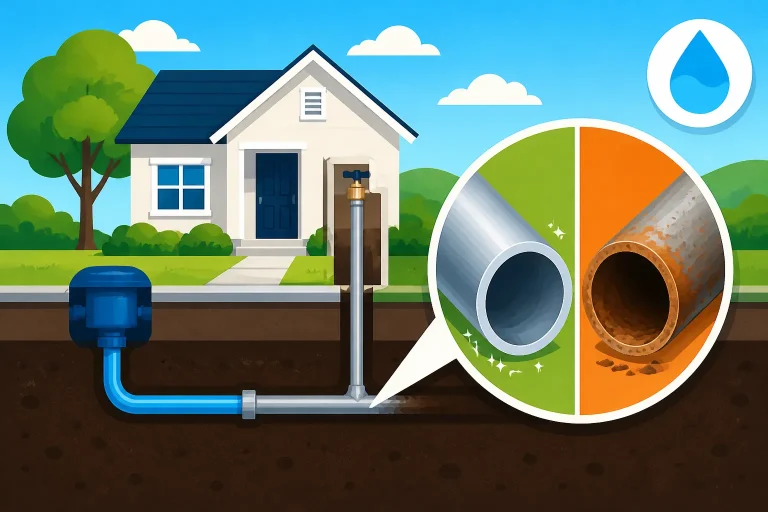
A water main can have leaks, joints and connections to other parts of the network. Under normal positive pressure, water tends to flow outward through a leak. If pressure drops sharply, the direction of flow can change in some circumstances. Water or material outside the pipe may then be drawn or pushed into it.
Possible sources of concern can include soil and water around a damaged pipe, contaminated water in a nearby trench, or water connected to plumbing that should remain separate from the public supply. The risk depends on the event, the location, the condition of the system and how long pressure stayed low. It is not possible to judge that risk from a faucet’s appearance alone.
Why low pressure matters even when the water looks clear
Some microorganisms and other contaminants cannot be seen, smelled or tasted. Water that runs clear after pressure returns is not proof that the affected pipes are free of contamination. Similarly, a normal taste or odor cannot confirm that water is safe to drink.
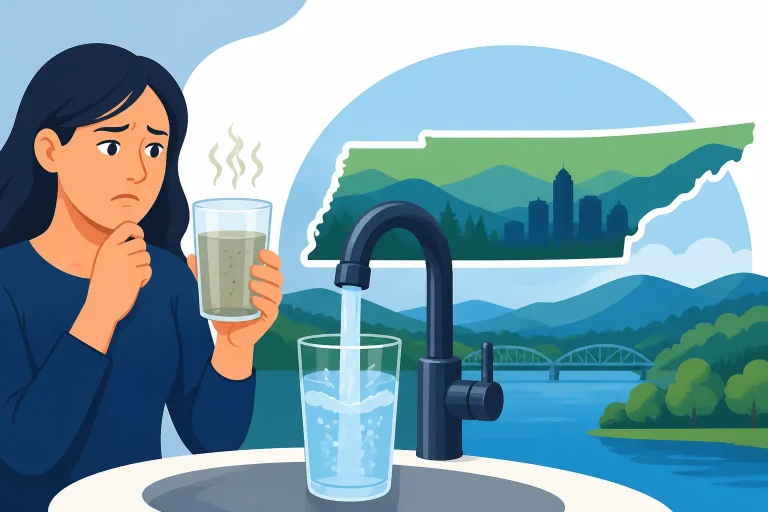
Discoloration, sediment or unusual odor may happen during a pressure event or when crews work on a main, but those signs do not tell you exactly what is in the water. If water looks or smells unusual, follow the utility’s instructions and report the condition through its official contact channels. For a starting point on interpreting changes, see Tennessee Tap Water That Tastes, Smells or Looks Off: A Starting Guide.
A boil-water notice is a public-health precaution about possible microbial contamination. It is not the same as a finding that contamination has been confirmed. Notices can be issued before test results are available because waiting for confirmation may leave customers without timely direction.
What can cause pressure to fall
Pressure can drop for several different reasons. Some are planned; others happen unexpectedly. The utility’s response depends on the cause, how much of the system is affected and whether it can maintain safe pressure in nearby areas.
| Event | How pressure may be affected | What customers may notice |
|---|---|---|
| Water-main break | Escaping water can reduce pressure in nearby pipes while crews isolate and repair the break | A sudden outage, weak flow, or a wet area near a street or yard |
| Pump or power problem | A pump may not move water as expected, or controls may not keep pressure stable | Low pressure across a larger area or service interruptions |
| Tank or storage issue | A storage tank may be unavailable or unable to support normal demand | Pressure changes affecting one or more pressure zones |
| High demand | Heavy use can contribute to low pressure in parts of a system, particularly where supply is strained | Reduced flow during peak demand or utility conservation requests |
| Planned valve or main work | Crews may shut off or redirect water to complete work | A scheduled interruption or temporary pressure change |
| Hydrant use or firefighting | Large, rapid water use can affect nearby pressure | A short-term drop near the incident or work area |
| Building plumbing problem | A problem inside a building can reduce flow at some or all fixtures there | Low pressure limited to one building, unit or faucet |
A pressure complaint at one faucet does not always mean the public main has lost pressure. A clogged fixture screen, a closed valve, a plumbing leak, a pressure-reducing valve problem or work inside a building can cause a local issue. If only one fixture is affected, the cause may be within the property. If several taps are weak, neighbors have the same problem, or the utility reports an outage, a system-level issue becomes more plausible.
That distinction matters, but it is not a reason to dismiss a notice. If a utility identifies a pressure event and issues instructions for your area, follow them even if your own faucet seems normal. Water in a home’s pipes may have been affected before pressure returned.
Why a main break can lead to a notice
During a main break, crews often need to close valves to isolate the damaged section. That can interrupt service or reduce pressure in neighboring areas. Repair work may involve excavation, draining, cutting or reconnecting pipe, and flushing after the repair. These steps are part of restoring the system, but they do not by themselves establish whether water in every affected area is ready to drink.
A utility may issue a notice when pressure loss, a break or another event creates enough uncertainty to warrant a precaution. The notice’s boundaries can be narrower or broader than the visible work site. Water moves through connected pipes, and valves and pressure zones do not always follow street or neighborhood boundaries.
If you see crews working nearby but have not received an alert, do not assume the work affects your address or that it does not. Check the utility’s official website, alerts or other communication channels. If you are unsure which system serves your home, Which Utility Serves Your Tennessee Address, and Where’s Its Report? can help you identify where to look.
When a Tennessee utility may issue a boil-water notice
A utility may issue a boil-water notice after a pressure loss when it believes the event could have affected water quality. The utility assesses what happened, which customers could be affected and what follow-up is needed. The details vary by event, so there is no single pressure reading or situation that residents should use to decide whether a notice is required.
The notice may be described as a boil-water advisory, notice or order. The wording can vary, but customers should treat an official instruction to boil water as a direction to follow, not as an optional suggestion. A notice might cover a defined neighborhood, part of a service area or a larger zone. It may also specify that only particular uses require precautions.
A notice can be issued while the utility works to confirm conditions, even if no test has shown contamination. The precaution helps customers reduce exposure to certain germs if they may have entered the system. For information about agencies and utility responsibilities, see Who Regulates Tennessee Drinking Water? TDEC, EPA and Your Utility.
Why the notice may arrive after pressure returns
Pressure can be restored before an investigation is complete. The utility may still need to assess the affected area, flush pipes or collect and review water samples. Restored flow means water is moving again; it does not by itself mean the notice has ended.
Likewise, one customer’s water returning is not a reliable signal that the whole affected area is cleared. The utility has to communicate when it considers the precaution no longer necessary. Wait for an official update that clearly says the notice has been lifted or gives new instructions. For ways to confirm that an advisory is over, see Is the Boil Order Over? Confirming With Your Tennessee Utility.
Notices are tied to location
A notice may apply to some addresses and not others, even within the same town or utility service area. Utilities may use street names, subdivisions, landmarks, maps or other boundaries to identify the affected area. Those boundaries can be unfamiliar, and a map may not make every address clear.
Check the notice against your service address rather than relying only on a social media post, a neighbor’s recollection or a general citywide headline. If your address is close to the boundary, contact the utility through its current official channels and ask whether the notice covers your property. The same care is useful for renters, businesses and people who receive water through a building manager: confirm the affected service address, not just the name of the neighborhood.
A utility can also update the affected area as it learns more. Recheck the official notice if the event continues or if you receive a later alert. To understand what may be tested and when customers must be notified about water concerns, see When Tennessee Utilities Must Notify You About Unsafe Drinking Water.
What to do while the notice is active
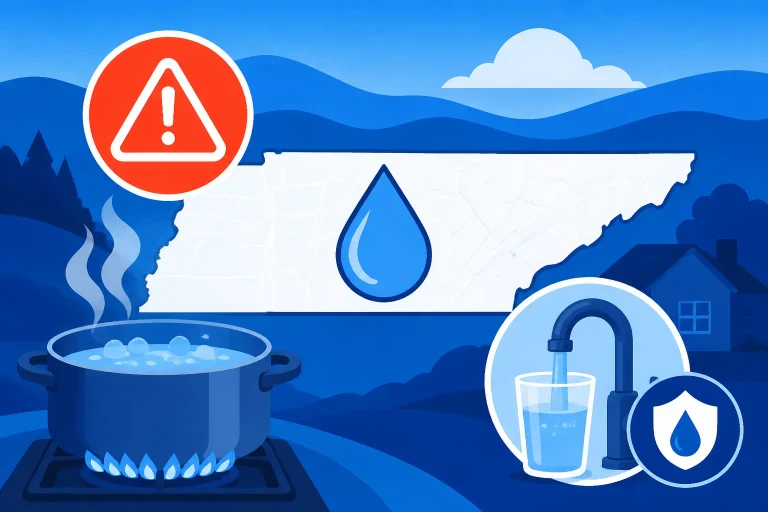
Follow the instructions in the notice exactly. If it says to boil water for particular uses, use bottled water or boil tap water as directed for those uses until the utility says the notice has ended. Do not decide that boiling is unnecessary because the water is clear or because pressure has returned.
A notice may list drinking, cooking, preparing food, brushing teeth and making ice among the uses that need precautions. It may include additional directions for children’s items, pets or other situations. The exact instructions can vary, so use the current notice rather than a generic checklist.
Use bottled water or follow the utility’s boiling directions
If bottled water is available, it can be used for the purposes identified in the notice. If you use tap water, follow the utility’s directions for boiling and handling it. Some notices specify a rolling boil and a particular duration; follow the duration stated in the notice. Let boiled water cool and store it in a clean, covered container.
If you cannot boil water safely, use bottled water for the uses covered by the notice. Do not use a countertop device, refrigerator filter or ordinary pitcher filter as a substitute for boiling unless the utility specifically says that device provides the needed protection during that event. Many filters are designed for particular substances or taste concerns, not for every microorganism that may be relevant during a pressure-related advisory. See Do Home Filters Make Water Safe During a Tennessee Boil Notice? for more on this distinction.
Check appliances and stored water
Ice made from tap water during the affected period may need to be discarded, depending on the utility’s directions. Do not assume that freezing made potentially affected water safe. If a refrigerator or freezer has an automatic ice maker, check the manufacturer’s instructions and the utility notice for what to do before using it again.
For water used in appliances, food preparation equipment or a business process, follow the utility’s instructions and any applicable workplace or food-safety guidance. Restaurants, childcare settings, healthcare facilities and other businesses may have additional procedures. A building manager or employer should not replace the utility’s instructions with informal advice.
Do not treat boiling as a fix for every contaminant
Boiling is a precaution against certain microorganisms; it does not remove lead, metals, salts or chemical contaminants. In some situations, boiling can increase the concentration of substances that do not evaporate with the water. If the notice mentions a chemical concern, or if the utility gives instructions that differ from boiling, follow those instructions instead.
A boil notice also does not mean that boiling solves plumbing issues inside a home. If you are concerned about lead from household plumbing or a service line, a boil-water notice is not a lead test. See Does Boiling Remove Lead From Tennessee Tap Water? and Does a Tennessee Water Quality Report Describe Water at Your Faucet? for the difference between system monitoring and conditions at an individual tap.
After pressure returns and the notice ends
The utility should communicate when the notice is lifted and whether customers need to take any follow-up steps. Keep following the notice until that official update arrives. A repaired main, normal faucet flow, or a message that service has been restored does not necessarily mean the boil-water instruction has ended.
After the utility lifts the notice, read the full update. It may tell customers to flush plumbing, discard ice, clean or restart equipment, or take other steps. Follow directions that apply to your home or business, and check whether a separate instruction applies to a refrigerator, filter or other appliance.
Use the utility’s notice, not a guess
To verify status, use the utility’s official website or alert system and check that the update covers your address. If an online map or message is unclear, use the official contact details listed by the utility. Do not rely on a notice from an unrelated service area: water systems in Tennessee can serve neighboring places, and one utility’s update may not apply to another.
The annual water quality report is useful for understanding a system’s monitoring and reported results, but it is not a live outage alert. A report covers a defined reporting period and does not tell you whether a boil notice is active today. Boil-Water Notice vs. Annual Water Quality Report: Not the Same Thing explains why these sources answer different questions.
If the utility lifts a notice and your water remains discolored, has an unusual odor or taste, or pressure remains low, contact the utility and describe what you observe. Avoid assuming that a lingering change means contamination, but do not use appearance or smell to rule it out either. The utility can advise whether the issue is related to the event, whether flushing is appropriate, or whether a separate plumbing problem needs attention.
If pressure drops again
A repeated drop in pressure may be related to the original repair, another system issue or a problem inside the property. Check for a new utility alert and ask whether the prior notice still applies. If you have no current notice but several taps or neighboring homes have weak flow, report the condition through the utility’s official channels so it can assess whether a broader pressure issue exists.
If low pressure affects only your home, a plumber may be able to identify an internal cause. Do not open or adjust utility-owned equipment. If you see water bubbling from the ground, a damaged meter area or a suspected main break, report it to the utility rather than attempting a repair.
Pressure loss is a warning condition, not proof of contamination. The most useful response is to follow the notice for your address, avoid substituting guesswork or household filters for official directions, and wait for a clear update from the utility before returning to normal use.
Frequently Asked Questions
Does every water-main break cause a boil-water notice?
No. A break can reduce pressure, but whether a notice is issued depends on the event, the affected area and the utility’s assessment. Follow any official notice that applies to your address.
Is the water safe as soon as pressure comes back?
Not necessarily. The utility may need to investigate, flush the system or review samples before lifting a notice. Wait for an official update.
Can I use a home filter instead of boiling?
Do not assume so. Filters are designed and certified for specific reduction claims, and many are not a substitute for the precautions in a boil-water notice. Follow the utility’s instructions.
Does boiling remove lead or chemicals?
No. Boiling is used as a precaution against certain microorganisms, not as a treatment for lead or chemical contamination. Follow specific utility instructions if another type of concern is involved.
Disclaimer
This article is for general informational purposes only and does not constitute professional advice. Laws, prices and regulations vary by location and change over time. Consult a qualified professional for guidance on your specific situation. Tennessee Water Guide is not a government agency or water utility and is not affiliated with any public water system.